Showing posts with label Torture. Show all posts

Friday, July 18, 2008

Torture: Truth and Consequences

Stuart Taylor has a piece in the upcoming issue of Newsweek suggesting that President Bush pardon everyone in his administration who might be held liable for war crimes sometime in the future. (Well, he puts quote marks around war crimes because, you know, that's all it takes to cast doubt on their occurrence.) Actually, despite the scare quotes, Taylor quickly admits that war crimes have occurred, saying "dark deeds have been conducted in the name of the United States government in recent years: the gruesome, late-night circus at Abu Ghraib, the beating to death of captives in Afghanistan, and the officially sanctioned waterboarding and brutalization of high-value Qaeda prisoners."

Given that admission, one might imagine he would support the imposition of consequences for those in the government who violated nearly every statute on the books, both domestic and international, in regards to treatment of detainees. One would be wrong.

It's a bad idea. In fact, President George W. Bush ought to pardon any official from cabinet secretary on down who might plausibly face prosecution for interrogation methods approved by administration lawyers. (It would be unseemly for Bush to pardon Vice President Dick Cheney or himself, but the next president wouldn't allow them to be prosecuted anyway—galling as that may be to critics.)

Yes, a President pardoning himself would be a tad "unseemly." Stronger adjectives could certainly be used as well. Why would Taylor, who readily admits crimes have been committed, warn against prosecution, you ask?

The reason for pardons is simple: what this country needs most is a full and true accounting of what took place. The incoming president should convene a truth commission, with subpoena power, to explore every possible misdeed and derive lessons from it. But this should not be a criminal investigation, which would only force officials to hire lawyers and batten down the hatches.

Pardons would further a truth commission's most important goals: to uncover all important facts, identify innocent victims to be compensated, foster a serious conversation about what U.S. interrogation rules should be, recommend legal reforms, pave the way for appropriate apologies and restore America's good name. The goals should not include wrecking the lives of men and women who made grievous mistakes while doing dirty work—work they had been advised by administration lawyers was legal, and which they believed was necessary to prevent terrorist mass murder.

No telling how we would respond if we thought the administration was being less than forthcoming. Taylor's argument here is absurd on its face. For one thing, nearly all of the things he contends would come out of an obfuscation commission have already made their appearance. There has already been plenty of discussion of the administrations policies, the interrogation rules were already in place whether they were ignored or not, and apologies doesn't bring back lives and reputation. If it's America's good name he's after, it is highly doubtful that the families of the men who died as a result of US custody will be quick to forgive, nor will denizens of the Mideast who see the War on Terror as a 21st-Century Crusade (a term which Bush himself has applied to it, remarkably.) If Taylor is dying for apologies, his argument breaks down by considering prosecution and apologies - whatever they're worth - mutually exclusive.

Following Taylor's logic, if a man broke into his house, robbed him and harmed his family he would seek only an apology as retribution. Any attempt to prosecute the culprit would simply cause him to "batten down the hatches" and the whole truth might not come out.

If the last seven years have taught Taylor anything, it's that the way to find the truth is not through the administration. Repeatedly, the government has denied every accusation only to modify its stance once the truth became apparent. Why, then, would a truth commission prove any different? The facts regarding torture are readily available, and the question of their legality has been answered many times over.

So-called "truth commissions" are of course common practice of American governance, and undertaken precisely because they arrive completely devoid of consequences, allowing the perpetrators to return a couple administrations later to do it all over again. Many of those in the Bush administration are veterans of the Nixon administration, and despite the Church Commission's findings, have revitalized the lawless Presidency. No matter how many times support for dictatorial coups or funneling illegal arms through Enemies of the State are exposed, "truth commissions" ensure that those actions will continue. A slap on the hand would be deemed too harsh an outcome.

If it's America's reputation that Taylor is after, he would be wise to support the imposition of consequences. It is precisely this tactic of never admitting or altering wrongdoing that is responsible for that reputation in the first place. If he wants to improve America's standing, he could start by pushing for America to show the rest of the world that we don't think we're above the law. We toss bellicose rhetoric around the globe with reckless abandon at those who violate any rule or agreement, yet we expect the world to stand aside as we violate every statute on the books banning mistreatment of detainees. Or we demand that the private mercenaries we subsidize face no prosecution for the outright murder of unarmed Iraqis.

Asking the US to subject itself to the same rules it imposes on everyone else isn't anti-American. It's a rational expectation of fair practice. Setting up a committee to enumerate to the world all that we've done wrong and ensuring that nothing will be punished or change will only erode America's reputation further.


Related:

Tortured Logic, April 14
Down Is the New Up, April 25
Trickle-Down Responsibility, May 9


Sphere: Related Content

Wednesday, July 2, 2008

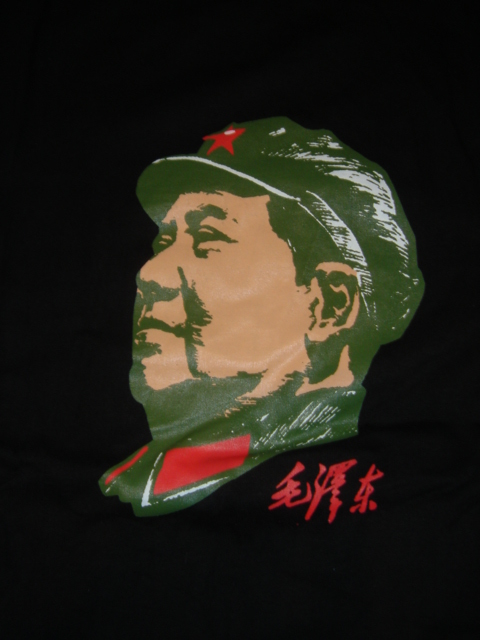
US Culls Its Gitmo Interrogation Policy From Mao's China

The phrase "do unto others as you would have them do unto you" has taken a new twist, as it has emerged that the interrogators at Guantanamo Bay were trained to use the techniques used against American soldiers by Communist China during the Korean War.

The military trainers who came to Guantánamo Bay in December 2002 based an entire interrogation class on a chart showing the effects of "coercive management techniques" for possible use on prisoners, including "sleep deprivation," "prolonged constraint," and "exposure."

What the trainers did not say, and may not have known, was that their chart had been copied verbatim from a 1957 Air Force study of Chinese Communist techniques used during the Korean War to obtain confessions, many of them false, from American prisoners.

By now, the question of whether the US has violated every torture agreement to which it is a signatory has been answered several times over, but the avalanche of evidence to that point shows no signs of slowing. America's foreign policy is, and always has been, that it has the absolute moral authority to lead the rest of the word. What should be, but isn't, implied by such a position is that the country must then exhibit some moral qualities before forcing them on others.

If engaging in the precise techniques it decried, rightfully, when used against its own soldiers does not contradict the very idea of moral superiority, then I cannot conceive of anything that would convince anyone otherwise.

Nearly all defense of the torturous interrogation techniques used at Guantanamo and elsewhere by the US has centered on the supposed ability of those interrogations to save American lives. The idea being, of course, that no one could in good conscience oppose anything that could produce information that prevents another attack. Mind you, the only proof anyone has of such a relationship is the government's word, which should speak for itself at this point.

But the title of the 1957 article from which the class was copied verbatim should shed some light on that particular fallacy: "Communist Attempts to Elicit False Confessions From Air Force Prisoners of War." From the concerns over the false confessions sprang SERE [Survival, Evasion, Resistance, Escape], a program designed to help American soldiers avoid falling for the tactics used to elicit propagandistic or false confessions.

The gall boggles the mind. While the propensity of interrogations to bring forth anything of value was already in doubt, the fact that the entire program was modeled on a program designed explicitly to elicit nothing of any use should close the book.

There is no exchange rate on human life. If it's torture when used on American soldiers, it's torture when Americans use it on others.

Related:

Tortured Logic, April 14
Trickle-Down Responsibility, May 9
Down is the New Up, April 25


Sphere: Related Content

Friday, May 9, 2008

Trickle-Down Responsibility

When the pictures of American soldiers taunting and humiliating detainees at Abu Ghraib surfaced in 2004, and subsequently the conditions at Guantanamo Bay came under more scrutiny, there was an immediate push to blame any perceived transgressions on "a few bad apples." In other words, sure, there may have been some incidents which crossed a boundary, but it was the effort of a few misguided souls, not a direct result of US policy.

Four years later, it has become increasingly clear that this defense bears little resemblance to the truth. President Bush, himself, recently admitted that he was aware of meetings in the White House held to plan just how far harsh interrogations were allowed to go.

This Thursday, Phillippe Sands met with Amy Goodman to discuss his recent Congressional testimony and added even more evidence to the top-down approach to torture and Guantanamo, in direct contradistinction to the administration's official position.

AMY GOODMAN: Can you talk about the former chair of the Joint Chiefs of Staff, General Richard Myers?

PHILLIPPE SANDS: There were two points. Firstly, as everyone knows, the President took a decision that none of the detainees at Guantanamo would have any rights under the Geneva Conventions. It seems that General Myers was unaware of that. He was under the impression they had decided that Geneva would apply...as we went through the techniques of interrogation one by one, that he had thought that these came out of the US Field Manual guide for interrogations. They were all prohibited. And as we went down the list, his jaw literally dropped. So I got the sense that the most powerful military man in the United States, indeed probably in the world, was blissfully unaware of what had been decided.

As Sands inferred from his conversations with Myers, one of the most powerful military men in the world was seemingly unaware of the legal wranglings and positioning going on behind the scenes and above his head. That suggestion syncs with much of the other information regarding questioning at Guantanamo which indicates that most military officers were opposed to the proposed questioning techniques. A large portion of that objection was the belief--well-founded, I think--that violating the Geneva Conventions and the Convention Against Torture would put future American POWs in danger of having the favor returned.

Because of the military commanders' opposition to harsh interrogation techniques, the administration was forced to go above their heads, and the void was filled by the Bush-Cheney legal team.

Part-and-parcel of the upper-echelon approval of torture at Guantanamo and abroad is the political spin campaign by the Pentagon to ensure that public would be unaware of the true scope of the administration's policy of interrogation.

Glenn Greenwald illuminated one such example on Friday, after examining the documents released by the Defense Department.

Greenwald expounds upon the specific case of Gen. Don Shepperd, and analyst employed by CNN, and member of a chaperoned tour of Guantanamo in 2005 designed to persuade the Pentagon's analysts (read: puppets) to present a positive spin in the face of bad publicity. The tour of the facility consumed just under 3 hours. Several pertinent quotes from Shepperd appear in the released documents, one of which summarizes his purpose quite nicely:

Did we drink the government Kool-Aid? Of course, and that was the point.

When he asked how he could help, top Rumsfeld aide Larry Di Rita replied "OK, but let's get him briefed on Khatani so he doesn't go too far on that one" (Third-person because response was via forwarded e-mail.) Khatani was thought to be the 20th hijacker, and considered one of the more egregious breeches of human rights at US facilities.

Shepperd apparently took the hint:

In numerous appearances on CNN talking about Gitmo, no mention was ever made of Khatani or other specific, documented abuses.

When he was finally asked about watching an interrogation, Shepperd assured the viewers that the interrogators could not have been more cordial. Presumably, he expected to be treated to an interrogation indicative of common practices on a PR trip, which could speak to his judgment one would think.

Support of the war has no bearing on finding this program not only immoral, but illegal. Whether one agrees with the war or even cares not about torture should find the elite levels to which the torture program reached and the scope of the Pentagon propaganda campaign alarming.

Sphere: Related Content

Friday, April 25, 2008

Down Is the New Up

Doug Feith, everyone's favorite revisionist historian, took the opportunity on Hugh Hewitt's show to claim, "We took an extremely strongly pro-Geneva Convention position in the Pentagon." An interesting take on historical record, indeed, considering the well-documented steps Feith and the rest of the Justice Department took in the overt aim of subverting the Geneva Conventions. War is Peace. Ignorance is Strength. And so on.

In Feith's conversations with Phillippe Sands, one might mistakenly construe that just the opposite is true.

With the war in Afghanistan under way, lawyers in Washington understood that they needed a uniform view on the constraints, if any, imposed by Geneva. Addington, Haynes, and Gonzales all objected to Geneva. Indeed, Haynes in December 2001 told the CentCom admiral in charge of detainees in Afghanistan “to ‘take the gloves off’ and ask whatever he wanted” in the questioning of John Walker Lindh.

[...]

On January 25, Alberto Gonzales put his name to a memo to the president supporting Haynes and Rumsfeld over Powell and Taft. This memo, which is believed to have been written by Addington, presented a “new paradigm” and described Geneva’s “strict limitations on questioning of enemy prisoners” as “obsolete.”

As to Feith's own opinion:

Douglas Feith had a long-standing intellectual interest in Geneva, and for many years had opposed legal protections for terrorists under international law. He referred me to an article he had written in 1985, in The National Interest, setting out his basic view. Geneva provided incentives to play by the rules; those who chose not to follow the rules, he argued, shouldn’t be allowed to rely on them, or else the whole Geneva structure would collapse. The only way to protect Geneva, in other words, was sometimes to limit its scope. To uphold Geneva’s protections, you might have to cast them aside.

[...]

As he saw it, either you were a detainee to whom Geneva didn’t apply or you were a detainee to whom Geneva applied but whose rights you couldn’t invoke.

Feith seems to be in a constant state of schizophrenic flux, not sure if he's settling on the storyline that he played an immense role in the administration or whether he was merely swept along unwittingly by the "idiots" that surrounded him.

Whatever narrative he chooses, the historical record enjoys no such fluctuation, always landing on the precise opposite of Feith's ludicrous claim to the Pentagon being "pro-Geneva."

There is enough in the public record now to firmly conclude, without an ounce of doubt, that the Bush Administration, both the Departments of Justice and Defense, actively sought a legal apparatus to eliminate the need for adherence to the Geneva Conventions. Far from being pro-Geneva, the Administration sought to render it useless and inapplicable.

As far back as 2004, around the time of Abu Ghraib, it was clear to nearly everyone that Feith had a long-standing, personal opposition to Geneva.

It was Feith who devised the legal solution for getting around the Geneva Conventions' prohibition on physically or psychologically coercing prisoners of war into talking. As a Pentagon official in the 1980s, Feith had laid out the argument that terrorists didn't deserve protection under the Geneva Conventions. Once the war on terrorism started, all he had to do was implement it. And even more damning than his legal rule-making is Feith's reported reaction to complaints by military Judge Advocate General lawyers about the new, looser interrogation rules. "They said he had a dismissive, if not derisive, attitude toward the Geneva Conventions," Scott Horton, a lawyer who was approached by six outraged JAG officers last year, told the Chicago Tribune. "One of them said he calls it 'law in the service of terror.'"

Whatever the Defense Department's outlook, it is clear that Feith has held a grudge against the Geneva Conventions for a long time, and most certainly would never have been confused with someone who was "pro-Geneva." It is fairly clear by any standard that the US is bound by not only the Geneva Conventions but numerous other treaties and mandates entered into of its own volition and prohibited from engaging in the torturous interrogations Feith and his cohorts actively supported.

Far from saying Feith supported Geneva, one could easily make the case that Feith acted as a pro-torture activist.

Sphere: Related Content

Monday, April 14, 2008

Tortured Logic

If there's one thing the War on Terror has made unambiguous, it's that ambiguity will continue to surround the actions of the United States and the Bush administration in its attempt to prevent further attacks upon the nation. Faced with preserving rights or preserving the ability of government to take those rights, Bush always sides with the latter, be it ever-growing surveillance powers or the use of torture in interrogations.

All too often, the administration is allowed to toss around misleading statements and outright falsehoods in the pursuit of those aims, and just as often cable news networks with 24 hours of space to fit questioning of the process fail miserably to that end. When the Attorney General was making up implausible scenarios in San Francisco, the news was centered on Barack Obama's inability to bowl. When the leader of the free world admitted that he knew and approved of violations of international and domestic law, the media wrapped itself in a blanket of despair over perceived elitism. From the poorest (relative term, of course) and least-established of the three candidates, no less.

What began years ago as "a few bad apples" participating in a sophomoric lapse in judgment has been fleshed out into full-fledged human rights violations under the umbrella of international and domestic statutes. And the media couldn't be less impressed.

As time has progressed from March of 2004, so has the overwhelming mountain of evidence pointing ever higher in the administration in search of the origins of the use of torture in US interrogation techniques. But, until Friday, there was nothing to link President Bush directly to the negotiations and planning. Those who thought such a revelation would portend some sort of culmination were sorely disappointed, as the country ignored the news with the same callous disregard in which Bush delivered it.

For the leader of a free nation to be admitting freely, without any hesitation or outwards sign of guilt, that he had full knowledge of his surrogates planning to break the law and be greeted with a shrug is nothing short of breathtaking.

First, it is important to emphasize that there is a definition of torture under US Code. It is a legal definition, not something which Bush or John Yoo get to manipulate with shifty words or maneuvering.

Sec. 2340. Definitions

As used in this chapter--
(1) "torture" means an act committed by a person acting under
the color of law specifically intended to inflict severe physical or
mental pain or suffering (other than pain or suffering incidental to
lawful sanctions) upon another person within his custody or physical
control;
(2) "severe mental pain or suffering" means the prolonged
mental harm caused by or resulting from--
(A) the intentional infliction or threatened infliction of
severe physical pain or suffering;
(B) the administration or application, or threatened
administration or application, of mind-altering substances or
other procedures calculated to disrupt profoundly the senses or
the personality;
(C) the threat of imminent death; or
(D) the threat that another person will imminently be
subjected to death, severe physical pain or suffering, or the
administration or application of mind-altering substances or
other procedures calculated to disrupt profoundly the senses or
personality; and

(3) "United States" means the several States of the United
States, the District of Columbia, and the commonwealths,
territories, and possessions of the United States.


Waterboarding has been the most-discussed method of interrogation (though the administration admits to using it on only 3 prisoners), and despite the rhetorical side-stepping of Bush and his appointees, it clearly meets the criteria of "'servere mental pain or suffering' resulting from threat of imminent death." There is really no way being made to feel as though drowning does not constitute 'threat of death.'

Yet, the act is still presented as an unclear procedure which may or may not be wrong, although any discussion of the veracity of either position is typically centered on the personal feelings of those involved in the argument rather than an objective utilization of definitions. When asked if the US tortured prisoners, Bush assured us "the United States does not torture," but we have admissions that waterboarding was used and the clear-enough definition of 'torture' under US Code to compare it to. This isn't a matter of asking the participants if they think they did anything wrong. It's not a matter of semantics. All that is required is a faithful adherence to the English language.

But beyond waterboarding, those interrogation techniques--though not talked about--which are much more widely-used still meet the definition. Consider several of the commonly-used methods: deprivation of sleep, deprivation of senses, exposure to extreme temperatures, and electric shock. To contend that these techniques fail to meet the definition spelled out in the US Code strains credibility and illustrates a wanton disregard for objectivity.

The definition clearly defines torture as "causing mental harm through procedures calculated to disrupt profoundly the senses or the personality." The Geneva Conventions explicitly prohibit "violence to life and person," "outrages upon personal dignity," and "conditions exposing [prisoners] to contagion or infection." All of the previously-listed techniques meet one or more of those definitions.

So George Bush is free to say that the "United States does not torture," but it is equally fair for others to bring up the actual definition of the US Code he has sworn to uphold in claiming he's lying. It's not a matter of opinion whether or not these acts are torture. There are legal definitions, and they are all met.

The administration, of course, does all this under the umbrella of homeland security. You've gotta break a few eggs to stop all the terrorists attacks. This first requires the belief that a government that missed a massive attack spanning two presidencies is suddenly competent enough to act upon what some schmuck says in conditions designed precisely so he'll say anything to get out of them. But, that aside, this again begs the question: When did the Executive Branch become responsible for interpreting and re-writing the law?

All good intentions aside, if the laws need to be changed, get them changed. Through legislation, not back-room semantic mangling by a sycophant flunkie. As much as it pains me, I mostly think Bush is a somewhat pitiful, hopeless idealist. I don't believe him to be inherently evil. But one thing is clear, and that is that the United States has flouted international treaties it has promised to uphold--and expects other countries to uphold when detaining our soldiers--and its own code.

Bush often says that history will be the true judge of his presidency. Sadly for him, I think that's true, because we haven't reached the end of the line yet. For all its egregious acts and slaps in the face to representative democracy, this administration has proven time and again that something more scandalous always lurks just around the corner.

Sphere: Related Content